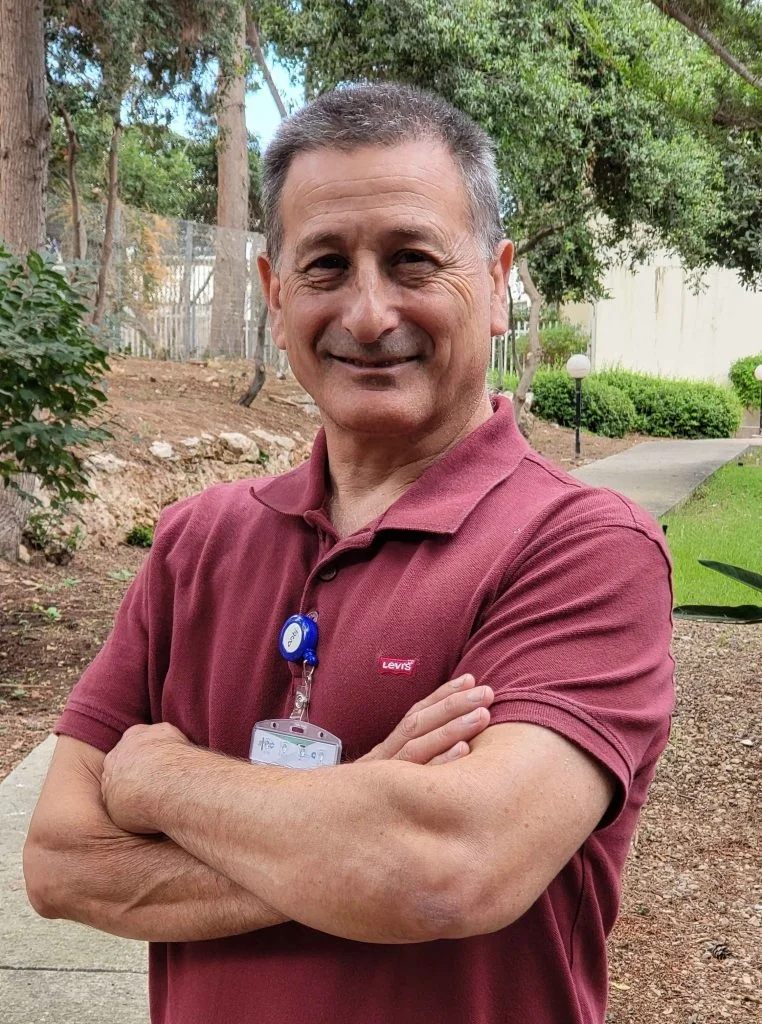
 By Dr. Avi Chezar, shoulder surgeon
In brief
Summarized and reviewed by Dr. Avi Chezar, shoulder surgery specialist, Assuta Haifa and RMC Afula.
- What it is
- During a first dislocation, a tear of the labrum (Bankart lesion) usually occurs – a tear that does not heal on its own and damages the stabilizing mechanism. With recurrent dislocations, wear of the anterior glenoid may develop.
- Symptoms
- Recurrent dislocations – the more episodes there are, the easier the trigger for the next dislocation becomes, to the point of dislocating during sleep. Shoulder apprehension: a feeling that "the shoulder is about to come out of place", which prevents certain movements.
- Diagnosis
- CT arthrogram or MRI arthrogram with contrast injection to assess the associated injuries. With clear recurrent dislocations, a plain CT can be enough to plan surgery.
- Treatment
- After a single episode, physiotherapy can be tried – but it does not heal the tear. Recurrent dislocations require surgery: arthroscopic repair (Bankart) or a Latarjet procedure when there is a bone defect, with 4–6 months of rehabilitation.
What are recurrent dislocations or shoulder instability?
This usually occurs in young people under age 40. The first dislocation is usually the result of an injury or a fall. The more dislocation episodes there are, the milder the triggering event becomes, to the point of dislocating during sleep or with a simple movement.
Instability shows itself most obviously as recurrent dislocations, but also as difficulty using the arm, mainly in a position with the arm raised and reaching backwards, similar to a throwing movement or a tennis stroke. The difficulty with function comes from a feeling of apprehension.
Shoulder apprehension is the feeling that "the shoulder is about to come out of place" during a particular movement. The patient avoids the problematic position or movement, and sometimes avoids activities such as sport or physical work for fear of another dislocation.
What causes the instability?
During the first dislocation, a tear of the ligaments that stabilize the shoulder occurs. This injury is called a Bankart lesion – a tear of a structure called the labrum. The tear does not heal on its own; because of the tear the shoulder's stabilizing mechanism is damaged, and any event can cause a dislocation. With recurrent dislocations, wear of the bone may develop, mainly of the anterior glenoid. This can be diagnosed with a CT scan of the shoulder.
Another bony finding in a dislocation is a compression injury of the back of the humeral head, caused by the head of the humerus pressing against the glenoid. This finding is called a Hill-Sachs "fracture", but it is not really a true fracture and does not need to be treated like one.
How is instability diagnosed?
- History – the patient reports repeated episodes of the joint coming out of place.
- When there are no clear dislocation episodes, the diagnosis is mainly clinical, based on typical findings on physical examination, including excessive mobility and signs of apprehension.
- To assess the associated injuries, a CT arthrogram or MRI arthrogram (with contrast injection) is needed; with recurrent dislocations and clear instability, a plain CT can be enough for assessment and pre-operative planning.
This imaging is essential for assessing the extent of bone damage in the shoulder and for choosing the appropriate type of surgery.
How is instability treated?
Conservative treatment
After a single dislocation, or a repeat dislocation after several years, treatment with physiotherapy can be tried. It is important to understand that physiotherapy does not heal the tear, but it may allow a return to normal activity.
Recurrent dislocations and signs of shoulder instability require surgery to stabilize the shoulder.
Surgical treatment
I usually perform one of two procedures:
- Arthroscopic repair of the capsular tear (Arthroscopic Bankart Repair)
- Arthroscopic stabilization by transferring the coracoid bone – the Latarjet procedure
The operation can also be done as an open operation, but my preference is to perform it arthroscopically.
The advantages of arthroscopic Latarjet (referring specifically to the Latarjet procedure): good, precise visualization of the surgical area, more accurate positioning of the bone and identification of structures at risk (for example nerves). In addition, I can identify and treat other problems in the shoulder in the same operation; damage to the surrounding tissues is significantly lower and the risk of infection is significantly lower. For these reasons, rehabilitation after surgery is easier and safer for the patient.
I have experience of more than 2,000 operations using this method, with very high success rates and a very low complication rate.
How is the type of surgery chosen?
The choice depends on: the extent of bone damage, the duration of symptoms, the patient's level of activity, the degree of flexibility, age and previous operations.
For further reading on the different operations, follow the relevant link on the site: Bankart repair · Latarjet procedure.
What happens after surgery?
After surgery, a rehabilitation period of 4–6 months is needed before returning to full activity. Rehabilitation includes physiotherapy both at a clinic and on your own at home. The exact instructions follow a protocol set by the operating surgeon.
Does the shoulder return to normal after surgery?
The goal of the operation is to allow a return to full activity without further dislocations.
To ensure the best possible result, it is important to carry out a full pre-operative assessment and to choose the most appropriate type of surgery.
Explanatory video
Treating recurrent dislocations and shoulder instability – An explanation of the treatment options for shoulder instability: from physiotherapy to arthroscopic surgery to repair the labrum and prevent recurrent dislocations. The video is in Hebrew.
Frequently asked questions about shoulder dislocation and instability
What causes shoulder instability after a first dislocation?
During the first dislocation, a tear of the ligaments that stabilize the shoulder occurs. This injury is called a Bankart lesion – a tear of a structure called the labrum. The tear does not heal on its own; because of this the stabilizing mechanism is damaged, and any event can cause a dislocation. With recurrent dislocations, wear of the bone of the anterior glenoid may also develop.
How do you choose between Bankart repair and a Latarjet procedure?
The choice depends on the extent of bone damage, the duration of symptoms, the patient's level of activity, the degree of flexibility, age and previous operations. The pre-operative assessment is done with a CT arthrogram, an MRI arthrogram, or a plain CT in cases of recurrent dislocations and clear instability – to assess the extent of bone damage and choose the appropriate type of surgery.
How long is rehabilitation after shoulder stabilization surgery?
After surgery, a rehabilitation period of 4–6 months is needed before returning to full activity. Rehabilitation includes physiotherapy both at a clinic and on your own at home, according to a protocol set by the operating surgeon.
Can the shoulder dislocate again after surgery?
The goal of the operation is to allow a return to full activity without further dislocations. To ensure the best possible result, it is important to carry out a full pre-operative assessment and to choose the most appropriate type of surgery. Dr. Chezar has experience of more than 2,000 operations using this method, with very high success rates and a very low complication rate.
Further reading from leading medical sources
For readers who want to go deeper, here are reliable sources from the American Academy of Orthopaedic Surgeons (AAOS – OrthoInfo):
- Chronic Shoulder Instability — OrthoInfo (AAOS)Shoulder instability and recurrent dislocations – diagnosis and treatment
External sources in English · open in a new tab