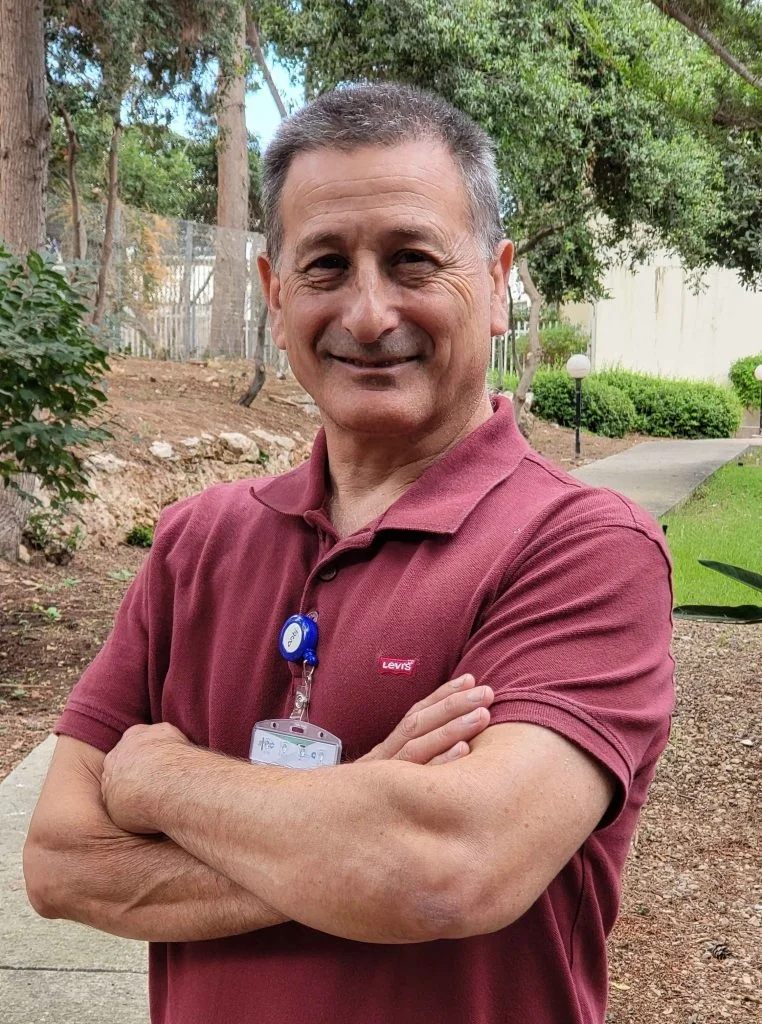
 By Dr. Avi Chezar, shoulder surgeon
In brief
Summarized and reviewed by Dr. Avi Chezar, shoulder surgery specialist, Assuta Haifa and RMC Afula.
- What it is
- A tear of a shoulder tendon usually means the tendon has been pulled off the bone, not that the tendon itself has torn through. The tear can be partial, full-thickness or massive – a massive tear sometimes involves several tendons that are completely detached.
- Symptoms
- Pain when raising the arm, with rotation movements and at night, together with difficulty using the arm. Sometimes there is marked weakness of the shoulder, mainly in activities with the arm raised.
- Diagnosis
- Ultrasound or MRI to assess the size of the tear and the quality of the muscles; an MRI is needed to detect fatty degeneration. An X-ray identifies associated problems in the bones and joints of the shoulder.
- Treatment
- Tears do not heal on their own; in small tears physiotherapy can reduce pain. In large tears with loss of function – arthroscopic surgical repair, and sooner is better than later.
How does it typically present?
Pain in the shoulder and upper arm that comes on gradually. The pain can also be the result of an injury or a fall on the shoulder, in which case the symptoms appear suddenly and strongly (see the section on traumatic rotator cuff tears).
The pain appears especially:
- when raising the arm
- with rotation movements (mainly backwards)
- with throwing movements
- and at night
The pain lasts a long time, and it is common to get only temporary relief after injections or pain treatments.
The pain is accompanied by:
- difficulty using the arm
- and sometimes marked weakness of the shoulder
- mainly in activities with the arm raised
What is a rotator cuff tear?
The rotator cuff muscles are responsible for keeping the head of the humerus in place and for rotation movements of the shoulder. In particular, these muscles rotate the shoulder, mainly turning the arm outwards (external rotation). They attach to the humerus through tendons that form a broad band.
A tear usually means the tendon has been pulled off the bone where it attaches, not that the tendon itself has torn through. In many cases, even when there was an injury, the tendon had already been weakened by chronic wear, and the injury turned this into a larger tear.
What types of tears are there?
1. Partial-thickness tear
A partial-thickness tear is a tear that involves only part of the thickness of the tendon. The tendon is still continuous, but worn on one side, with some of its fibers torn. Partial tears are usually small and mainly cause pain.
2. Full-thickness tear
In a full-thickness tear there is an actual hole in the tendon through the full thickness of the fibers (a complete hole in the tendon from side to side). The tendon may still be continuous on either side of the tear, but at the site of the tear the fibers are torn through the full thickness of the tendon.
A full-thickness tear can be small, in which case it behaves like a partial tear, that is:
- function is mostly preserved
- and the main problem is pain
The larger the tear in width and length, the greater the loss of shoulder function and strength.
3. Massive tear
A very large tear, sometimes involving several tendons, with complete detachment of the tendons. In these cases the tendon is pulled back by the muscle.
A massive tear usually leads to:
- very severe limitation of shoulder function
- and sometimes, in fact, to less pain
Treating massive tears is more difficult and rehabilitation takes longer.
How is a rotator cuff tear diagnosed?
Diagnosis starts with the symptoms and the physical examination.
Imaging needed:
- Ultrasound or MRI – these are the main tests.
- To assess the size of the tear more accurately and to judge the quality of the muscles themselves – whether or not there is fatty degeneration – an MRI is needed.
- For some of the smaller tears, an ultrasound (US) is enough for diagnosis.
An important part of the initial work-up is an X-ray, whose purpose is to identify associated problems in the bones and joints of the shoulder, such as:
- cartilage wear in the shoulder joint
- cartilage wear in the acromioclavicular joint (AC joint)
A rotator cuff tear cannot be diagnosed from an X-ray.
How is a traumatic rotator cuff tear treated?
Rotator cuff tears do not heal on their own – only through surgical repair of the tear. That said, many people live and function fully despite having a tear, so the mere presence of a tear certainly does not mean surgery is required.
In some cases, physiotherapy can achieve:
- improved shoulder function
- less pain
- and a return to activity
This is despite the tear still being there. It is achieved by strengthening the remaining muscles so that they take over the role of the torn tendon (see the muscle-strengthening exercise protocol). In such cases it is advisable to monitor the tear to make sure it does not get worse over time.
Repairing the torn tendon requires surgery. The operation can be done open or arthroscopically; today it is standard to perform it arthroscopically (see arthroscopic rotator cuff repair). During the operation the tendon is repaired by stitching it back to the shoulder bone from which it tore.
After surgery there is a rehabilitation period lasting several months, which requires:
- the patient's cooperation
- and daily physiotherapy
Expect pain mainly in the first two weeks, although the pain sometimes lasts longer, even months.
There are situations in which a repair is not possible, and even if it is done, the chance of a re-tear is high. These are cases in which:
- the tear is too large
- or the quality of the muscles themselves is poor, because of prolonged disuse
In these cases, mainly in older people (there is no clear-cut rule, but certainly above age 70), a joint replacement can be performed with a special implant of the reverse shoulder type. This implant has a special design intended for this situation and allows the shoulder to function despite the torn tendons (see reverse shoulder replacement).
Keep in mind
Conservative (non-surgical) treatment does not heal the tear: not medication, not physiotherapy, not injections and not complementary-medicine treatments.
What are the chances that tendon repair surgery succeeds?
The chances of success depend on many factors, including: the size of the tear, the time from the onset of the tear to the repair, the patient's age, general health, the quality of the bone and tendons, the range of motion of the shoulder before surgery, the level of activity before the injury, and the patient's motivation.
The smaller the tear, the shorter the time since the injury, and the younger and more motivated the patient – the chances of success are very high.
For an accurate assessment, consult your treating physician.
What can happen if surgery is not done?
The tear will not heal and continues to get worse over time. The larger the tear, the greater the chance of:
- the tear continuing to grow
- and loss of function
Bear in mind that with large tears, and those accompanied by restricted movement, the longer surgery is postponed:
- the lower the chances that the operation succeeds
- the harder the rehabilitation
- and the less good the functional result at the end of the process
On the other hand, if the tear is partial or small and shoulder function is preserved, surgery can be postponed and physiotherapy can be tried.
Summary
When the tear is relatively small or partial, shoulder movement is good and there is no significant impact on quality of life, my preference is conservative treatment, mainly physiotherapy. If there is no improvement, or if things get worse with loss of function and/or quality of life, surgery should be considered.
In large tears, and especially with loss of function such as:
- restricted movement
- inability to raise the arm above shoulder height
- difficulty sleeping
- and especially if physiotherapy has already been tried
my recommendation is surgical repair of the tear, and sooner is better than later. In a massive tear that cannot be repaired, the different options should be discussed according to the current level of function and the degree of pain, and if needed a decision made on a reverse shoulder replacement.
This explanation is background and a general summary of the subject, from my professional point of view.
Every case is individual and requires a personal consultation and discussion with the treating physician.
Explanatory video
Rotator cuff tears – diagnosis and treatment – A detailed explanation of rotator cuff tendon tears: the types of tear, symptoms, diagnosis with MRI and the treatment options – from physiotherapy to minimally invasive surgery. The video is in Hebrew.
Frequently asked questions about rotator cuff tears
What is the difference between a partial-thickness and a full-thickness rotator cuff tear?
A partial-thickness tear involves only part of the thickness of the tendon – the tendon is still continuous, but worn on one side, with some of its fibers torn. In a full-thickness tear there is an actual hole in the tendon through the full thickness of the fibers, from side to side. The larger the tear in width and length, the greater the loss of shoulder function and strength.
When is an MRI needed, and when is an X-ray enough for diagnosis?
Ultrasound or MRI are the main tests for diagnosing the tear. To assess the size of the tear and the quality of the muscles – whether or not there is fatty degeneration – an MRI is needed. An X-ray is used to identify associated problems in the bones and joints of the shoulder, but a rotator cuff tear cannot be diagnosed from an X-ray alone.
How long is rehabilitation after rotator cuff repair surgery?
After surgery there is a rehabilitation period lasting several months, which requires the patient's cooperation and daily physiotherapy. Expect pain mainly in the first two weeks, although the pain may last longer, sometimes even months.
What are the chances that tendon repair surgery succeeds?
The chances of success depend on many factors: the size of the tear, the time from the onset of the tear to the repair, the patient's age, general health, the quality of the bone and tendons, and the patient's motivation. The smaller the tear, the shorter the time since the injury, and the younger and more motivated the patient – the chances of success are very high.
When can the tear not be repaired, so that a joint replacement is needed?
There are situations in which the tendon cannot be repaired, or in which, even if it is repaired, the chance of a re-tear is high. These are cases in which the tear is too large, or the quality of the muscles themselves is poor because of prolonged disuse. In these situations, mainly in older people (there is no clear-cut rule, but certainly above age 70), a joint replacement can be performed with a special implant of the reverse shoulder type – an implant designed for this situation that allows the shoulder to function despite the torn tendons.
Further reading from leading medical sources
For readers who want to go deeper, here are reliable sources from the American Academy of Orthopaedic Surgeons (AAOS – OrthoInfo):
- Rotator Cuff Tears — OrthoInfo (AAOS)Anatomy, symptoms, diagnosis and treatment
- Rotator Cuff Tears: FAQ — OrthoInfo (AAOS)Frequently asked questions about rotator cuff tears
External sources in English · open in a new tab