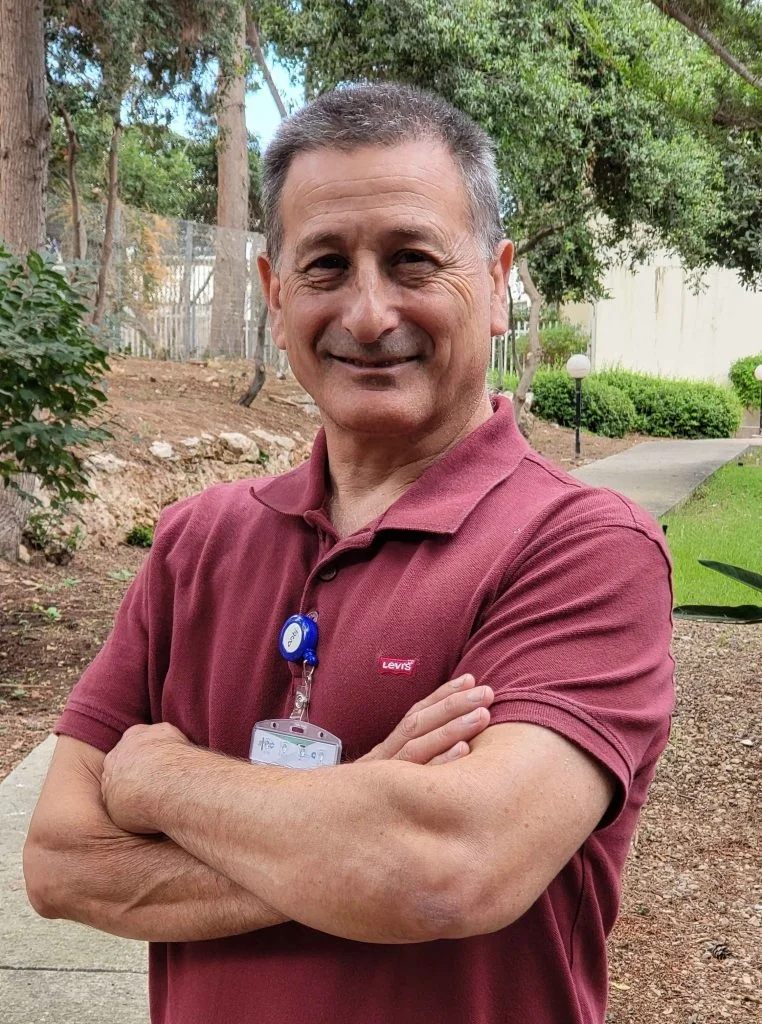
 By Dr. Avi Chezar, shoulder surgeon
In brief
Summarized and reviewed by Dr. Avi Chezar, shoulder surgery specialist, Assuta Haifa and RMC Afula.
- What it is
- A surgical procedure performed inside the shoulder using an optical fiber and a camera inserted through small incisions of 0.5–1 cm. The operation allows a full view of the inside of the shoulder and precise surgical work.
- When
- Most shoulder procedures today are performed arthroscopically: repair of tendon and labral tears, removal of calcifications, joint debridement, and even complex procedures such as Latarjet. Only joint replacements and complex fractures are performed with an open technique.
- Diagnosis
- The operation itself makes it possible to see and reach every part of the shoulder and to make a full and accurate diagnosis.
- The surgery
- Performed under general anesthesia and usually also regional anesthesia – after which the arm may stay numb for up to 24 hours. Two incisions are enough for simple procedures; for complex procedures more incisions are added as needed.
What is shoulder arthroscopy?
A surgical procedure performed inside the shoulder using an optical fiber and a camera inserted into the shoulder, through which the inside of the shoulder can be seen on a screen and surgical procedures can be carried out.
The operation is performed under general anesthesia. In most operations I also add regional anesthesia, which is similar to the numbing injection a dentist gives in the jaw. After the operation the whole arm may stay numb for up to 24 hours. This anesthesia allows minimal use of anesthetic drugs during surgery, an easy and quick recovery, and no pain immediately after the operation – the time when pain is at its worst.
The whole operation is performed through several small incisions of 0.5–1 cm.
For simple procedures two incisions are enough; for complex procedures more incisions are added as needed. The number of incisions does not substantially change the operation itself.
The advantages of arthroscopic surgery compared with open surgery are many
- In open surgery there is a relatively large incision with access to a limited area of the shoulder. In arthroscopic surgery, as many incisions as needed can be made, and every part of the shoulder can be seen and reached.
- Damage to the surrounding tissues is extremely small, and there is no difficulty at all with repeat surgery if needed, because there is no scarring.
- The chance of complications such as bleeding or infection is almost zero in arthroscopic surgery.
- Recovery is easier and the cosmetic result is better with arthroscopic surgery.
To allow work in a confined space such as a joint, fluid (saline – salt water, similar to the solutions used for intravenous fluids) is pumped in through a special pump that keeps a constant pressure inside the joint.
Some of the fluid is absorbed into the tissues around the shoulder, so after the operation the shoulder will be swollen. The fluid is absorbed by the tissue and does not cause any damage. Usually the shoulder returns to its normal shape within a few hours.
Performing arthroscopic surgery requires a lot of dedicated equipment, including: a fluid pump, a camera, a light source, equipment for cauterizing tissue and stopping bleeding, as well as dedicated instruments for working inside the joint and dedicated implants for the joint.
| Criterion | Arthroscopic surgery | Open surgery |
|---|---|---|
| Size of incision | Small, minimal incisions | Relatively large incision |
| Access to areas of the shoulder | Every part of the shoulder can be seen and reached | Access limited to one area only |
| Damage to surrounding tissues | Very minimal | There may be significant damage to surrounding tissues |
| Risk of complications (bleeding / infection) | Lowest | Relatively higher |
| Scarring and effect on repeat surgery | Almost no scarring; repeat surgery is easy if needed | Significant scarring that may make repeat surgery harder |
| Recovery | Easier and faster | Longer recovery |
| Cosmetic result | Better (fewer scars) | Less good (more scars) |
My personal preference is to perform operations arthroscopically as far as possible. Most surgical procedures in the shoulder, including complex procedures such as the Latarjet procedure for recurrent dislocations and even the repair of some shoulder fractures, are performed by me with an arthroscopic technique. The only operations performed with an open technique are joint replacements and complex fractures.
For details about specific operations, see: rotator cuff repair · Latarjet procedure · Bankart repair.
Explanatory video
Rotator cuff tears – diagnosis and treatment – A detailed explanation of rotator cuff tendon tears: the types of tear, symptoms, diagnosis with MRI and the treatment options – from physiotherapy to minimally invasive surgery. The video is in Hebrew.
Frequently asked questions
What is shoulder arthroscopy?
A surgical procedure performed inside the shoulder using an optical fiber and a camera inserted into the shoulder, through which the inside of the shoulder can be seen on a screen and surgical procedures can be carried out. The whole operation is performed through several small incisions of 0.5–1 cm. For simple procedures two incisions are enough; for complex procedures more incisions are added as needed.
How is anesthesia given in arthroscopic shoulder surgery?
The operation is performed under general anesthesia. Usually regional anesthesia is also added, similar to the numbing injection a dentist gives in the jaw. After the operation the arm may stay numb for up to 24 hours. This anesthesia allows minimal use of anesthetic drugs during surgery, an easy and quick recovery, and no pain immediately after the operation – the time when pain is at its worst.
What are the advantages of arthroscopic surgery over open surgery?
In arthroscopic surgery every part of the shoulder can be seen and reached, unlike open surgery, in which access to the area is limited. Damage to the surrounding tissues is extremely small, and there is no difficulty at all with repeat surgery because there is no scarring. The chance of complications such as bleeding or infection is almost zero. Recovery is easier and the cosmetic result is better with arthroscopic surgery.
Which shoulder operations are performed arthroscopically?
Most surgical procedures in the shoulder are performed arthroscopically, including complex procedures such as the Latarjet procedure for recurrent dislocations and even the repair of some shoulder fractures. The only operations performed with an open technique are joint replacements and complex fractures.
Further reading from leading medical sources
For readers who want to go deeper, here are reliable sources from the American Academy of Orthopaedic Surgeons (AAOS – OrthoInfo):
- Shoulder Arthroscopy — OrthoInfo (AAOS)How shoulder arthroscopy is performed
External sources in English · open in a new tab