Senior orthopedic surgeon · Shoulder specialist

Dr. Avi Chezar, English-speaking shoulder surgeon in Haifa & Northern Israel

Dr. Chezar leads the shoulder service at Carmel Medical Center in Haifa and has been named one of Israel's top shoulder surgeons by Forbes Israel every year since 2017. He treats rotator cuff tears, recurrent dislocations, frozen shoulder, arthritis and fractures – and he explains every option to you in English.

  • Clinics at Assuta Haifa (Sun & Wed) and Medica RMC Afula (Tue)
  • All Israeli health funds and private insurance – reimbursement available
  • The secretary answers in English, from booking to follow-up
Dr. Avi Chezar, orthopedic shoulder surgeon, in a white medical coat
Forbes Israel Top Doctors 2017 – 2026 · Shoulder surgery

20+

Years of orthopedic practice, thousands of shoulder operations

10yrs

In a row on the Forbes Israel list of top shoulder surgeons

4.9/5

From 286 verified patient reviews on DocAdvisor

Dun's 100

Leading shoulder & elbow physicians in Israel, since 2023

Official profiles
  • Carmel Medical Center – Dr. Chezar's profile
  • Assuta – Dr. Chezar's profile
  • Medica RMC – Dr. Chezar's profile
  • Clalit – Dr. Chezar's listing
  • Maccabi – Dr. Chezar's listing

In brief

Who Dr. Chezar is, and how to see him

Dr. Avi Chezar is a senior orthopedic surgeon who specializes in the shoulder. He is responsible for the shoulder service at Carmel Medical Center in Haifa and sees private patients in English at Assuta Haifa and at Medica RMC in Afula. Appointments are booked by phone on 052-422-4623.

Specialty
Orthopedic surgery of the shoulder – arthroscopy, instability, rotator cuff, fractures and joint replacement
Hospital
Carmel Medical Center, Haifa – senior physician, Department of Orthopedics
Operates at
Assuta Haifa, Elisha Hospital Haifa and Medica RMC Afula
Clinics
Assuta Haifa: Sun 09:00–15:00, Wed 16:00–20:00
Medica RMC Afula: Tue 14:30–19:00
Languages
English and Hebrew – doctor and secretary
Coverage
All Israeli health funds (kupot holim) and private insurers
Booking
052-422-4623 · WhatsApp for a call-back
License
Israel Ministry of Health, no. 1-32448
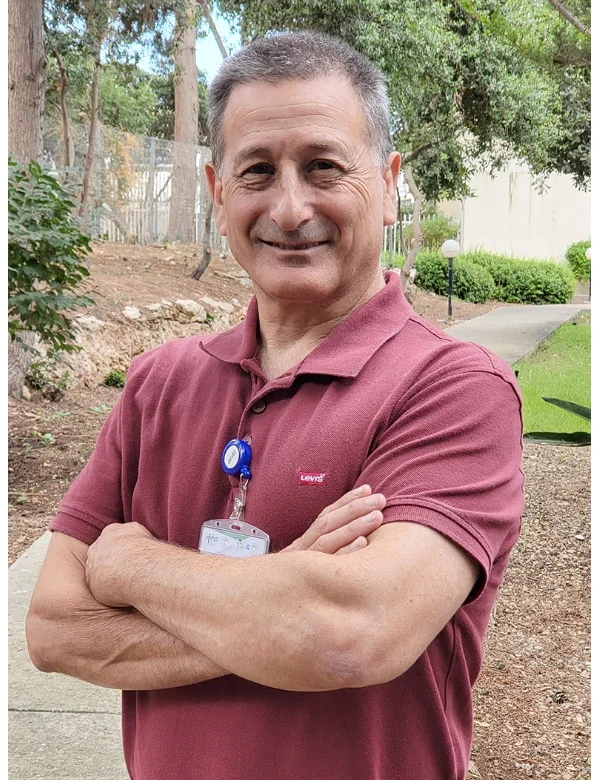
Dr. Avi Chezar, orthopedic shoulder surgeon, standing outdoors with his hospital badge
Dr. Avi Chezar, MD – Technion graduate, Rambam-trained orthopedic surgeon

About Dr. Chezar

A career built around the shoulder

Dr. Avi Chezar has practiced orthopedic surgery for more than twenty years and has performed thousands of shoulder operations, from keyhole tendon repairs to complex fractures and joint replacements. Every year since 2017, Forbes Israel has named him one of the country's three leading shoulder surgeons, based on nominations from senior physicians and department heads. Since 2023 he has also been listed in Dun's 100 among Israel's leading shoulder and elbow physicians.

Today he is a senior physician in the Department of Orthopedics at Carmel Medical Center, where he is responsible for the shoulder service. He operates privately at Assuta Haifa, Elisha Hospital and Medica RMC in Afula. Before Carmel, he spent many years at HaEmek Medical Center in Afula, first as deputy head of orthopedics and then as head of its Shoulder Surgery Unit.

Patients describe the same thing again and again: he explains what happened, what the options are and what recovery will really look like – and he stays involved until the shoulder works again, including written rehabilitation protocols for the physiotherapist.

  1. TodayCarmel Medical Center, HaifaSenior physician, responsible for the shoulder service
  2. 2011 – 2025HaEmek Medical Center, AfulaDeputy head of orthopedics, then head of the Shoulder Surgery Unit
  3. 2012 – 2015Israeli Shoulder & Elbow SocietySociety secretary
  4. 2000 – 2006Rambam Medical Center, HaifaOrthopedic residency – first place nationally in the board examinations
  5. 1992 – 1998Technion Faculty of MedicineMD, Dean's List

Shoulder training at the shoulder unit of Tel Aviv Sourasky Medical Center (Ichilov). Recognized by Mitek (Johnson & Johnson) as a European training center for shoulder surgery; teaches surgeons in Israel and abroad, including live surgery in India and China. Outside the hospital he volunteers with the Galil Carmel rescue unit and with Erez, helping people with disabilities ski, cycle and sail.

Arthroscopic Latarjet in Israel

One of a small number of surgeons worldwide who perform the Latarjet procedure fully arthroscopically.

For a shoulder that keeps dislocating, the choice of operation depends mainly on the bone at the front of the socket. Dr. Chezar does the Latarjet through small keyhole incisions instead of an open incision, which allows a faster recovery with fewer complications.

  • Arthroscopic Bankart repairReattaches the torn labrum with anchors – the standard repair when there is no significant bone loss. Full activity, including contact sport, at about 6 months.
  • Arthroscopic LatarjetUsed when there is significant bone loss or a previous repair has failed. Bone-to-bone healing; full activity, including contact sport, at about 4–5 months.
Full guide to the Latarjet procedure (Hebrew)

Conditions & treatments

What Dr. Chezar treats

Most shoulder operations today are done arthroscopically, through a few small keyhole incisions. Where treatment without surgery can work, that comes first – a second opinion often starts with exactly that question.

Rotator cuff tears

Tendon tears · shoulder pain and weakness

A torn rotator cuff tendon does not heal back to the bone on its own. Smaller tears may settle with targeted physiotherapy; when surgery is needed, the tendon is reattached arthroscopically with suture anchors.

Treatment: physiotherapy, or arthroscopic rotator cuff repair

Full activity6–9 months after repair

Dislocation & instability

Recurrent dislocation · labral tears

A first dislocation usually tears the labrum (a Bankart lesion), which does not heal on its own – and with every further dislocation the next one comes more easily. Recurrent dislocations need surgical stabilization: a Bankart repair of the labrum, or a Latarjet procedure when bone is missing.

Treatment: arthroscopic Bankart repair or arthroscopic Latarjet

Full activity4–6 months, including sport

Frozen shoulder

Adhesive capsulitis

Pain first, then marked stiffness. More than 95% of frozen shoulders recover without any intervention; treatment focuses on relieving pain while movement gradually returns.

Treatment: local heat and pain relief – in the frozen phase, physiotherapy and injections do not help

Typical courseMonths, sometimes up to two years

Calcific tendonitis

Calcium deposits in the tendon

Calcium deposits inside the rotator cuff can cause sudden, severe pain. Treatment starts with anti-inflammatory medication and local heat, then a cortisone injection if needed; a large deposit that keeps causing pain is removed arthroscopically.

Treatment: medication and heat, injection, or arthroscopic removal

Rehab after surgeryUsually a few weeks

SLAP & biceps tears

Upper labrum · long head of the biceps

Tears of the upper labrum and of the long head of the biceps tendon. Most need no operation: an upper labral tear is often not the real source of the pain, and a biceps tear rarely affects function much. If a biceps repair is chosen, it should be done within about three weeks of the injury.

Treatment: a muscle-strengthening protocol; surgery only in selected cases

TimingBiceps repair within ~3 weeks

Shoulder arthritis

Glenohumeral osteoarthritis · massive cuff tears

When cartilage wear or a massive, irreparable rotator cuff tear makes every movement painful, a reverse total shoulder replacement can restore a functional, pain-free shoulder. It is usually performed after age 65.

Treatment: conservative care, or reverse shoulder replacement

Daily functionAbout 3 months; improving for over a year

Fractures & ACJ injuries

Proximal humerus · acromioclavicular joint

Complex fractures of the upper arm are fixed with a titanium plate and screws, or treated with a partial or reverse replacement when the bone cannot be reconstructed. AC joint separations are graded and treated accordingly.

Treatment: fracture fixation (ORIF), partial or reverse replacement

Good functionAbout 6 months

The detailed patient guides and post-operative physiotherapy protocols are written in Hebrew; a Hebrew–English glossary of shoulder terms can help with imaging reports. Dr. Chezar also provides medico-legal opinions for shoulder injuries.

Recovery

How long does recovery take?

Typical timelines from Dr. Chezar's patient guides. Your own plan depends on the injury, what is found during surgery and daily physiotherapy – it is discussed with you before any operation.

Typical timelines only – not a substitute for an individual assessment.
OperationFirst weeksEveryday functionFull activity
Rotator cuff repairSling 3–6 weeks; office work after ~2 weeks, driving after ~6 weeksAbout 3 months6–9 months
Bankart repairSling, then daily physiotherapyImproves over the first monthsAbout 6 months
LatarjetDaily physiotherapyMost movement back within 2–3 months4–5 months
Reverse shoulder replacementSling 3 weeks, then physiotherapyAbout 3 monthsImproving beyond 1 year
Fracture fixation / partial replacementSling 3–4 weeks, then physiotherapyAbout 3 monthsGood function at ~6 months

Your visit

From the first call to recovery

Everything happens in English – the call, the consultation, the paperwork and the follow-up.

  1. Call the secretary

    Phone 052-422-4623 (+972-52-422-4623 from abroad). If nobody answers, send a WhatsApp message and you will get a call back.

  2. Bring your imaging on a disc

    X-ray, ultrasound or MRI. The images themselves are needed – a written report alone is not enough.

  3. Consultation

    Examination, a review of your images with you, and a clear explanation of every option – including whether surgery is needed at all.

  4. Treatment and follow-up

    If you need an operation, Dr. Chezar performs it himself and follows you through recovery, with a written physiotherapy protocol for each stage.

Second opinion

Told you need shoulder surgery? Dr. Chezar reviews the diagnosis and imaging and tells you whether an operation is really necessary.

Health funds & insurance

Reimbursement from all Israeli health funds and private insurers. Official profiles with Clalit, Maccabi, Assuta, Carmel and Medica RMC.

Patient reviews

What patients say

4.9out of 5

286 verified reviews on DocAdvisor – doctors cannot pay for ratings there.

DocAdvisor
“I have never in my life met such a good, professional and kind doctor. He explains everything – what happened and what to expect after surgery – and he even gave the physiotherapists step-by-step guidance.”
Avraham · February 2026
“I came to Dr. Chezar with severe pain and limited movement. After the surgery I returned to full function. The care was amazing and the professionalism – the highest level there is.”
Dani · October 2025 · Rotator cuff surgery
“His warm, calming manner helped most in the stressful moments before surgery – and he came by several times afterwards to make sure everything was alright.”
Liat · May 2025
“A pleasant, kind, available and professional doctor – truly the best there is. I chose him and waited two months for an appointment because of his skill.”
Hana · April 2025

Translated from the Hebrew originals, verified on DocAdvisor. Read all 286 reviews on the Hebrew site.

Clinics & hours

Where to find Dr. Chezar

Two clinics in the north, easy to reach from Haifa, the Krayot, the Jezreel Valley and the Galilee. Patients come from all over Israel.

Haifa

Assuta Haifa

55 HaHistadrut Blvd, Haifa 3296043
Clinic hours
Sunday09:00 – 15:00
Wednesday16:00 – 20:00

Afula

Medica RMC

Emek Center, 18 Yitzhak Rabin Blvd, 2nd floor, Afula
Clinic hours
Tuesday14:30 – 19:00

Questions

Frequently asked questions

Medically reviewed by Dr. Avi Chezar, orthopedic shoulder surgeon.
Last updated .

Does Dr. Chezar see patients in English?

Yes. Dr. Chezar consults, operates and follows up in fluent English, and the clinic secretary speaks English as well – so booking, paperwork and follow-up are all straightforward for English speakers.

How do I book an appointment?

Call the clinic secretary at 052-422-4623 (+972-52-422-4623 from abroad). If there is no answer, send a WhatsApp message to the same number and the secretary will call you back.

Where and when does Dr. Chezar see patients?

At Assuta Haifa, 55 HaHistadrut Blvd, on Sundays 09:00–15:00 and Wednesdays 16:00–20:00, and at Medica RMC in Afula (Emek Center, 18 Yitzhak Rabin Blvd, 2nd floor) on Tuesdays 14:30–19:00. Patients come from all over Israel.

Is the consultation covered by my health fund or insurance?

Reimbursements are available from all Israeli health funds (kupot holim) and private insurance plans. Dr. Chezar holds official profiles with Clalit, Maccabi, Assuta, Carmel Medical Center and Medica RMC.

What should I bring to the consultation?

Bring all relevant imaging – X-ray, ultrasound or MRI – on a disc. The images themselves are required; a written report alone is not sufficient.

Can I get a second opinion before shoulder surgery?

Yes. A second opinion before deciding on shoulder surgery is one of the clinic's core services: Dr. Chezar reviews the diagnosis and the imaging and advises whether surgery is really needed or whether a conservative route is reasonable.

Does a rotator cuff tear heal without surgery?

A torn rotator cuff tendon does not heal back to the bone on its own – only surgical repair reattaches it. In some cases, especially smaller tears, targeted physiotherapy can reduce pain and improve function by strengthening the surrounding muscles.

How long is recovery after rotator cuff repair?

The arm is kept in a sling for 3–6 weeks. Office work is usually possible after about two weeks and driving after about six weeks. Reasonable everyday function is expected by about three months, and a return to full activity at 6–9 months, depending on the size of the tear.

When is a Latarjet recommended instead of a Bankart repair?

An arthroscopic Bankart repair reattaches the torn labrum and is the standard repair when there is no significant bone loss. The Latarjet procedure is preferred when there is significant bone loss at the socket or when a previous stabilization has failed. Dr. Chezar performs the Latarjet fully arthroscopically.

Does frozen shoulder need surgery?

Rarely. More than 95% of frozen shoulders recover without any intervention. Treatment focuses on pain relief during the painful phase, and movement returns gradually over months.

Appointments

Book a consultation

The fastest way is a phone call to the secretary. You can also leave your details and the clinic will get back to you.

Send a message

Leave your details and the clinic will get back to you.

Send via WhatsApp instead